Strategic Applications of Key Silhouette Vector Illustration Art in Modern Branding
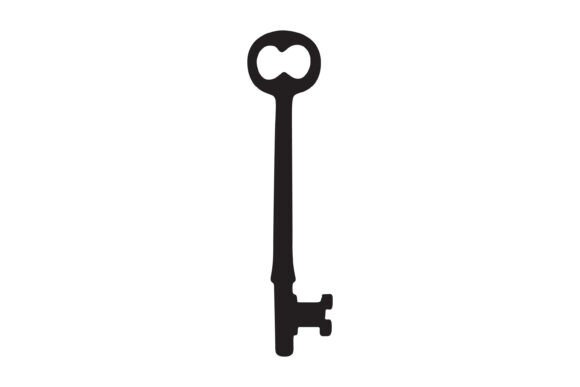
In the visual language of commerce and communication, few symbols carry as much immediate psychological weight as the key. It is a universal signifier of access, security, mystery, and opportunity. For designers, marketers, and business owners, leveraging this symbolism effectively requires more than just dropping an icon onto a canvas. It demands a strategic approach to visual assets. This is where Key Silhouette Vector Illustration Art becomes an invaluable resource. Unlike complex, detailed renderings that may distract or date quickly, a silhouette offers clarity. It strips away the noise, leaving only the essential form. This minimalism is not merely an aesthetic choice; it is a functional one that enhances recognition and versatility across diverse media.
When you integrate a vintage key silhouette into your brand ecosystem, you are tapping into a deep reservoir of cultural meaning. The concept of "unlocking" is central to many value propositions, from cybersecurity firms promising data protection to educational platforms offering the keys to knowledge. However, the effectiveness of this imagery depends entirely on context and execution. A poorly chosen graphic can feel cliché or generic. A well-selected, high-quality vector illustration, however, can anchor a brand identity, streamline communication, and elevate the perceived value of your offerings. Understanding how to deploy these assets intentionally is a critical skill for any decision-maker involved in creative direction.
The Strategic Value of Vector Formats in Professional Design
Before discussing the artistic merits, it is crucial to address the technical foundation of your visual assets. In professional design workflows, the file format is as important as the image itself. Raster images, such as standard JPEGs, are composed of pixels. When scaled up, they lose resolution, becoming blurry and unprofessional. This is unacceptable for modern branding, where a logo might appear on a business card today and a billboard tomorrow.
This is why acquiring Key Silhouette Vector Illustration Art in scalable formats is non-negotiable for serious projects. Vector graphics use mathematical equations to define lines and shapes, allowing them to be resized infinitely without any loss of quality. When you purchase a package that includes Adobe Illustrator (AI), Encapsulated PostScript (EPS), Scalable Vector Graphics (SVG), and Portable Document Format (PDF) files, you are investing in future-proof flexibility.
- AI and EPS: These are the industry standards for print and professional editing. They allow designers to manipulate individual anchor points, adjust curves, and modify colors to match exact brand guidelines.
- SVG: Essential for web development, SVGs ensure crisp rendering on high-density screens (Retina displays) while keeping file sizes small for faster page load times.
- PDF: Ideal for quick previews and sharing with stakeholders who do not have specialized design software.
- JPG: Useful for immediate, low-stakes applications like social media posts or internal presentations, though not suitable for final print production.
By ensuring you have access to these varied formats, typically compressed in a single ZIP file for convenience, you remove technical bottlenecks from your workflow. You empower your team to adapt the asset to any medium instantly, supporting agile marketing and consistent brand presentation.
Aligning Visual Metaphors with Business Goals
The decision to use a key silhouette should never be arbitrary. It must align with your broader strategic objectives. Ask yourself: What are we unlocking? What barrier are we removing? The answer to these questions will dictate how you style and position the illustration.
For businesses in the security and technology sectors, a clean, sharp key silhouette conveys reliability and precision. It suggests that your solution is the definitive answer to a complex problem. Here, the vintage aspect of the illustration can be softened or modernized through color choices—perhaps using sleek blues or metallic grays—to balance tradition with innovation. The goal is to communicate trust. Customers need to feel that their data, assets, or physical spaces are secure, and the key is a reassuring symbol of controlled access.
Conversely, for brands in the hospitality, travel, or luxury goods industries, the same vintage key silhouette takes on a different tone. It evokes exclusivity, heritage, and invitation. An ornate, classic key outline on an invitation or packaging suggests that the customer is being granted entry into a special experience. In this context, the "vintage" quality is a feature, not a bug. It adds warmth and narrative depth, distinguishing your brand from sterile, hyper-modern competitors. The strategic use of this art form helps craft a customer experience that feels personalized and privileged.
Navigating the Risks of Generic Imagery
While the key is a powerful symbol, it is also common. This presents a strategic risk: blending in. If every competitor uses a similar clip-art style key, your brand loses distinctiveness. To mitigate this, you must approach Key Silhouette Vector Illustration Art with a focus on customization and context.
Do not simply place the vector on a white background and call it a day. Consider how the silhouette interacts with your typography, color palette, and overall layout. Can you deconstruct the key? Use only the bow or the bit? Combine it with other geometric elements to create a unique lockup? The versatility of vector files allows for this level of manipulation. By treating the illustration as a raw material rather than a finished product, you maintain creative control and ensure the final output supports your unique brand positioning.
Furthermore, avoid using the key metaphor if it does not genuinely reflect your service. If your business model is about open-source collaboration or transparency, a key—which implies locking and restricting—might send a conflicting message. Strategic consistency between your visual symbols and your operational reality is vital for building long-term trust with your audience.
Practical Implementation Across Channels
Once you have selected the right asset and aligned it with your goals, the next step is deployment. The high-quality nature of vector illustrations means they perform exceptionally well across both digital and print channels. Here are practical ways to integrate this art into your operations:
- Logo Development and Brand Identity: Use the silhouette as a primary mark or a secondary element in your logo suite. Its simplicity ensures legibility at small sizes, such as favicons or app icons.
- Content Marketing and Blogging: Break up text-heavy articles with relevant vector graphics. A key silhouette can serve as a bullet point marker or a section divider, subtly reinforcing themes of solutions and insights.
- Packaging and Product Design: For physical products, the crisp lines of an EPS or PDF vector print beautifully on labels, boxes, and tags. It adds a touch of elegance without increasing printing costs associated with complex multi-color designs.
- Social Media Campaigns: Use the SVG or JPG versions to create cohesive visual themes for Instagram or LinkedIn posts. Consistency in visual assets helps build brand recall over time.
- Presentation Decks: Enhance investor pitches or client proposals with symbolic imagery. A key graphic can visually summarize a slide about "unlocking market potential" or "accessing new demographics."
Each of these applications contributes to a cohesive brand narrative. When customers encounter the same visual language across different touchpoints, it reinforces professionalism and attention to detail. This consistency is a hallmark of successful brands.
Long-Term Value and Asset Management
Investing in high-quality vector art is a decision that pays dividends over time. Unlike trend-driven illustrations that may look outdated in a year, a classic silhouette is timeless. It transcends fleeting design fads, ensuring that your materials remain relevant and professional for years. This longevity reduces the need for frequent redesigns, saving both time and resources.
Moreover, owning the source files (AI, EPS) gives you full autonomy. You are not reliant on a subscription service or a third-party designer for minor adjustments. Your internal team can tweak colors, resize elements, or adapt the graphic for new campaigns instantly. This operational efficiency is a significant advantage in fast-paced business environments.
Remember to store these files securely and organize them logically. Label your ZIP extracts clearly, distinguishing between the editable vector formats and the raster previews. Good asset management ensures that when you need to scale a campaign or update a document, the right tools are immediately accessible. This discipline supports productivity and reduces friction in creative workflows.
In conclusion, Key Silhouette Vector Illustration Art is more than just a decorative element. It is a strategic tool that, when used with intention, can enhance branding, clarify communication, and support business objectives. By understanding the technical advantages of vector formats, aligning the visual metaphor with your core message, and deploying the asset consistently across channels, you can unlock greater impact for your brand. Approach your design decisions with the same rigor you apply to your business strategy, and let every visual element serve a clear, purposeful role in your long-term success.