Curled-Up Fox, Illustration Watercolor: A Guide to High-Quality Usage
The visual appeal of a Curled-Up Fox, Illustration Watercolor lies in its ability to convey warmth, tranquility, and natural elegance. For designers, educators, and content creators, this specific type of asset is more than just a decorative element; it is a versatile tool that can elevate nature-themed designs, educational materials, and personal projects. However, the difference between a professional-looking final product and a disappointing result often comes down to understanding the technical specifications and proper application of digital art files. Many users overlook critical details regarding resolution, file formats, and licensing, leading to avoidable errors in their workflow.
Understanding the Asset and Its Value
Watercolor illustrations have seen a resurgence in popularity due to their organic texture and soft aesthetic. A fox curled up in sleep or rest symbolizes comfort and connection to the wild, making it an ideal choice for brands focusing on sustainability, wellness, or childhood education. When you acquire a high-quality Curled-Up Fox, Illustration Watercolor, you are investing in a piece of art that has already undergone the complex process of digital painting, scanning, and editing. The value here is not just in the image itself, but in the time saved by not having to create it from scratch.
These illustrations are particularly effective because they bridge the gap between realistic wildlife depiction and artistic interpretation. They are soft enough to be inviting yet detailed enough to be engaging. This balance makes them suitable for a wide range of applications, from packaging design to classroom posters. However, to leverage this versatility, one must understand the technical foundation of the file provided.
Common Mistakes in Selection and Usage
One of the most frequent errors creators make is ignoring the technical specifications of the digital file. It is easy to assume that any image labeled "high quality" will work for any purpose. This is rarely the case. Below are common pitfalls that can compromise your project’s integrity.
Overlooking Resolution and DPI
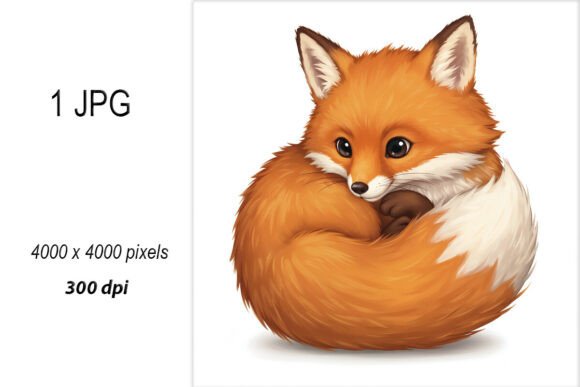
The standard specification for professional print work is 300 DPI (dots per inch). Many beginners download images at 72 DPI, which is standard for web use but disastrous for printing. If you attempt to print a 72 DPI image on a poster or a product package, the result will be pixelated and blurry. The Curled-Up Fox, Illustration Watercolor described here comes at 300 DPI, ensuring crisp lines and smooth color gradients when printed. Ignoring this detail can lead to wasted materials and unhappy clients or customers.
Misjudging Size and Scalability
Another common misunderstanding involves file dimensions. A size of 4000 x 4000 pixels offers significant flexibility. At 300 DPI, this translates to a print size of approximately 13.3 inches by 13.3 inches. Some users mistakenly believe they can stretch a smaller image to fit this space without loss of quality. Digital raster images, such as JPGs, do not scale up well. If you start with a smaller file and enlarge it, you introduce artifacts and blurriness. Always start with the largest available file size to maintain clarity.
Neglecting File Format Limitations
The format specified is JPG. While JPG is universally compatible and efficient for storage, it is a lossy format. This means that every time you save a JPG, some data is compressed and lost. A frequent mistake is editing a JPG repeatedly and saving over the original file. This degrades the image quality over time. Additionally, JPGs do not support transparency. If you need the fox illustration to sit seamlessly on a colored background without a white box around it, you cannot achieve this directly with a JPG. You must use photo editing software to remove the background, which requires additional skill and time.
Practical Advice for Optimal Results
To ensure you get the most out of your Curled-Up Fox, Illustration Watercolor, adopt a workflow that respects the technical constraints and leverages the asset’s strengths. Here is how to avoid the pitfalls mentioned above.
- Verify Specifications Before Purchase: Always check the DPI and pixel dimensions before downloading or buying. Ensure the 4000 x 4000 pixel size meets your largest intended print dimension. If you need a larger print, consider vector formats or higher-resolution options if available.
- Preserve the Original File: Keep the original JPG untouched. Create a copy for editing. This ensures you always have a pristine version to return to if mistakes are made during the design process.
- Handle Transparency Correctly: Since the file is a JPG, it will have a solid background. If your project requires transparency, use software like Photoshop or GIMP to carefully select and remove the background. Use tools like the "Magic Wand" or "Pen Tool" for precise edges, especially around the soft watercolor textures.
- Color Profile Awareness: Check if the file is in RGB or CMYK color mode. Web designs use RGB, while professional printing often requires CMYK. Converting colors incorrectly can lead to shifts in hue, making the watercolor tones look dull or inaccurate. Adjust your design software settings accordingly.
Evaluating Suitability for Your Project
Before integrating the illustration into your work, consider the context. Is the tone of your project aligned with the gentle, natural vibe of a watercolor fox? For educational materials, this image can help soften complex topics, making them more approachable for students. For marketers, it can evoke feelings of trust and calmness. However, if your brand identity is bold, geometric, or high-contrast, this soft illustration might clash. Always evaluate visual harmony.
Furthermore, think about the end-user experience. If you are creating a product for sale, such as a greeting card or a tote bag, the quality of the print reflects directly on your brand. Using a high-resolution, 300 DPI file ensures that the customer receives a premium product. Cutting corners on image quality can damage your reputation and lead to returns or negative reviews.
Final Checks Before Implementation
When you are ready to use the Curled-Up Fox, Illustration Watercolor, perform a final review. Zoom in to 100% on your screen to check for any unexpected artifacts or edge issues if you have removed the background. Print a test page if possible, especially for color-critical projects. This small step can save significant time and resources by catching issues early.
In conclusion, while the aesthetic appeal of watercolor art is immediate, its successful implementation requires technical diligence. By respecting resolution limits, understanding file formats, and planning your workflow carefully, you can transform a simple digital file into a standout element of your creative project. Whether you are a seasoned designer or a hobbyist, treating your assets with care ensures that your final output is both beautiful and professional.